
Reviewed by Dr Manuj Agarwal · Last updated 1 September 2026
What is a Eustachian tube function test?
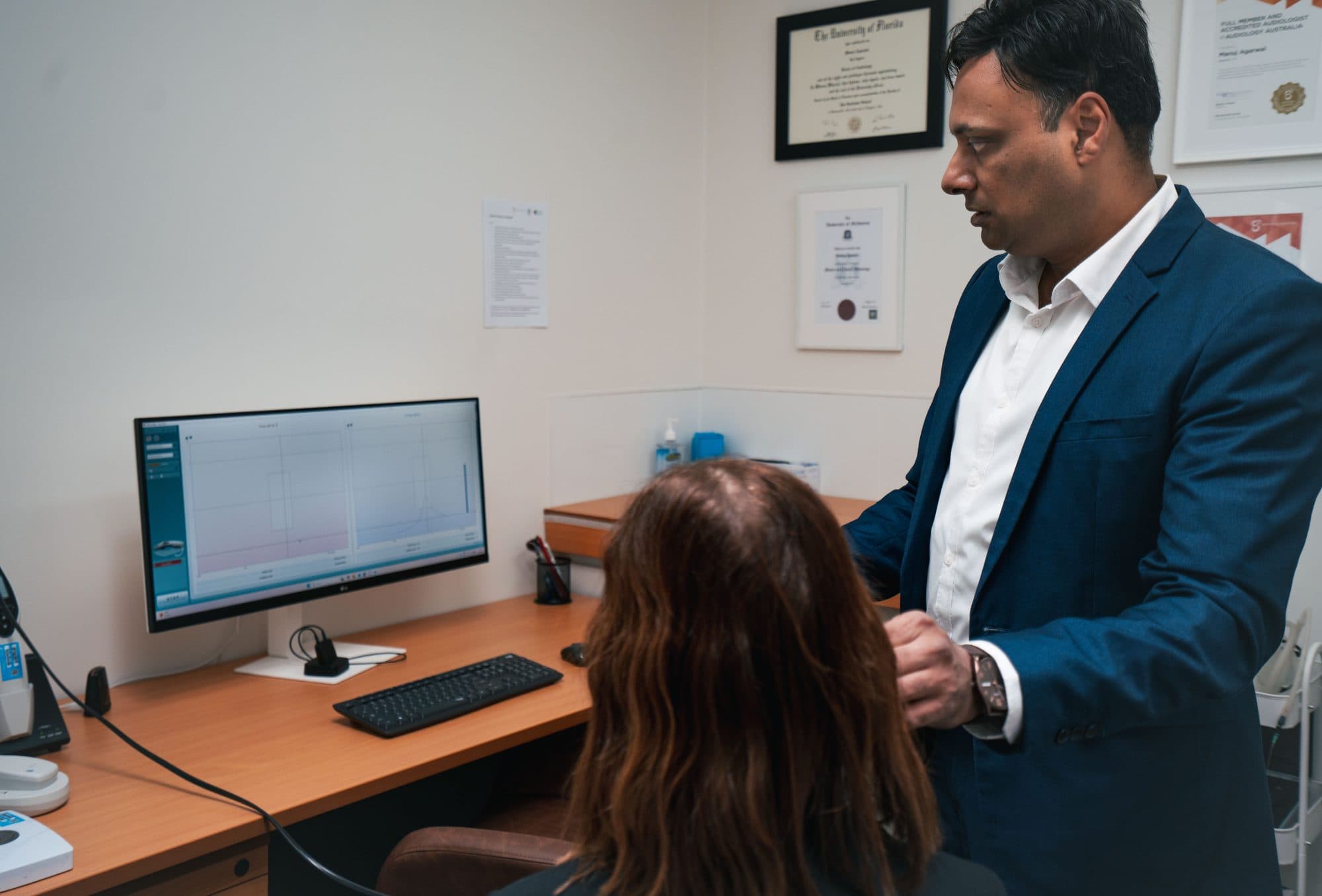
The test combines your symptom history with objective measurements from a tympanometer. Eustachian tube function can be assessed with conventional tympanometry. If the tympanogram peaks at more than -150 daPa middle ear pressure, Eustachian tube function is considered abnormal.
How is the test done?
The assessment involves three tympanograms performed in sequence.
- Initial tympanogram. A regular baseline measurement of your middle ear pressure.
- Positive pressure test. The ear is pressurised to +400 daPa. You swallow or perform a Toynbee manoeuvre (swallowing while holding your nose), then another tympanogram is recorded.
- Negative pressure test. The ear is pressurised to -400 daPa. You perform a Valsalva manoeuvre (blowing gently while holding your nose), then a further tympanogram is recorded.
What do the results mean?
Normal Eustachian tube function shows a negative shift in pressure during the second test and a positive shift in pressure during the third test, with a total pressure shift of at least 15 to 20 daPa. Your audiologist explains your results and what they mean for you.
| Test | Pressure applied | Expected normal response |
|---|---|---|
| 1. Baseline | None | Reference tympanogram |
| 2. Positive pressure | +400 daPa | Negative shift in pressure |
| 3. Negative pressure | -400 daPa | Positive shift in pressure |
Who might need this test?
The test may be helpful if you have ear fullness, muffled hearing or difficulty equalising ear pressure. It is often done alongside a hearing test. Call 03 7042 9301 to discuss whether it suits you.
Frequently asked questions
What does a Eustachian tube function test involve?
The test involves your symptom history plus three tympanograms in sequence: a baseline, one after positive pressure (+400 daPa) with swallowing or a Toynbee manoeuvre, and one after negative pressure (-400 daPa) with a Valsalva manoeuvre. It uses a tympanometer and is done in the clinic.
How do you know if Eustachian tube function is abnormal?
If the tympanogram peaks at more than -150 daPa middle ear pressure, Eustachian tube function is considered abnormal. In a normal test, pressure shifts negatively in the second test and positively in the third, by a total of at least 15 to 20 daPa.
What is a Toynbee or Valsalva manoeuvre?
A Toynbee manoeuvre means swallowing while holding your nose. A Valsalva manoeuvre means blowing gently while holding your nose. Both are used during the test to see how your Eustachian tube responds to pressure changes. Your audiologist guides you through each step.
Where can I have the test in Melbourne?
We offer the test at Unit 5/330 High St, Ashburton; Medical Specialists, 60 Stud Road, Dandenong GP Superclinic; and Belgrave Suite, 1579 Burwood Hwy, Tecoma. Call 03 7042 9301 to book.
Is it covered by bulk billing or funding?
Pensioners and eligible Department of Veterans' Affairs clients receive fully funded services, and bulk billing is available for eligible patients with a GP referral. Call 03 7042 9301 and we will confirm what applies to you before you book.
Related information
Hearing test
A full diagnostic hearing assessment with results and a clear plan in the same visit.
Learn more →Balance assessment
Eye-movement testing with videonystagmography to investigate dizziness, vertigo and imbalance.
Learn more →Vertigo
A spinning or off-balance sensation, common inner ear causes, and how it is assessed.
Learn more →Ear Wax Microsuction
Gentle, water-free ear wax removal by an audiologist using magnification and low suction.
Learn more →Book at a clinic near you
Dandenong
Medical Specialists, 60 Stud Road, Dandenong GP Superclinic VIC 3175
- Wednesday: 9am–4pm
- Saturday: 12pm–5pm
Your journey to better hearing starts here
Choose a clinic, service and time that suits you. Your booking goes straight to our clinic team, who will confirm your appointment, your cost, and whether you need a referral.
Prefer to call?
03 7042 9301Pick a clinic, service and time in under two minutes.